
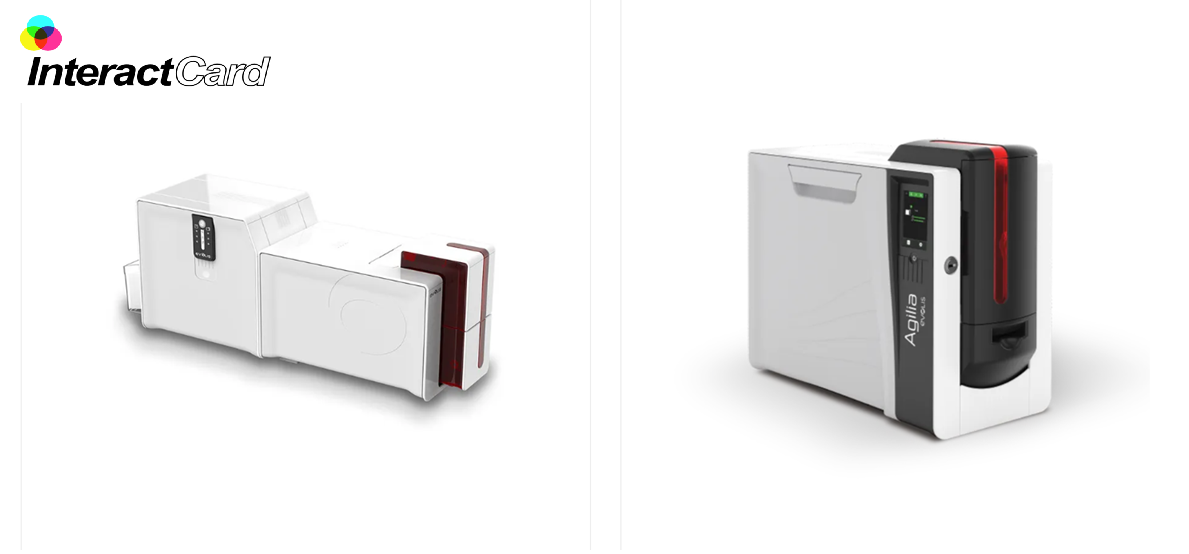
A tech guide to choosing a faster and secure ID card printer
Identity verification is no longer just an administrative requirement as organizations move toward fully digitised workplaces. It has become a crucial security function. Companies across every sector are rethinking how they issue ID badges and control access, along with managing visitor movement in 2025. At the centre of this transformation is the modern ID card printer. It is a powerful in-house device. It enables instant and secure, as well as flexible, credential creation. The guide below offers you a full understanding of the present identity printing systems and helps you choose the perfect solution for future-ready operations.
Why on-premises card printing is now essential
The shift in hybrid workplaces with stricter compliance laws and automated attendance systems with rapid employee onboarding has increased the need for secure and immediate identity exposure. Thus, small organizations and large enterprises are adopting on-premises identity card printers. These are devices that are capable of producing durable and scannable cards within minutes.
Real-time credentials support
Instant badge replacement with the right name badge printer machine
Faster provisioning of new hires or students
Controlled access management
Lower operational risk
Data privacy compliance
An in-house printing system gives organizations control over their identity infrastructure.
Beyond printers: The full identity credentialing stack
A professional ID system is safer than a machine. It operates as an integrated credentialing ecosystem with four interconnected layers.
Hardware whine
The central printing device, which includes DTC or Retransfer or Lare, or Lamination models.
Print technology
Each uses different thermal processes and colour diffusion as well as ribbon structures.
Credential media
It may include PVC or PET, or Polycarbonate, or metal-core cards or hybrid encrypted cards.
Security encoders
It may include Magstripe or RFID or Prox or Mifare or DESFire, or QR/NFC integrations.
The modular ecosystem ensures the output is not just visually appealing but secure and long-lasting, along with being technologically compatible with your workplace access systems.
Technology breakdown: Comparing all ID printing engines
Not all card printers perform the same. Choosing the right printing engine ensures durability with clarity as well as seamless integration.
Direct to card or DTC
It uses dye heat diffusion to print directly on PVC cards.
Fastest printing
Cost-efficient consumables
Bets for high volume daily needs, such as in schools or offices, or warehouses
Referrander or HDP
It prints onto a film, which is then fused to the card
Edge-to-edge vivid prints
Works on textured or smart cards
Ideal for hospitals as well as banks and government ID programs
Laser Engraving Printers
It is used for national IDs and high-level security cards.
Permanent markings
Resists counterfeiting
Highest durability and tamper resistance
Evaluate what level of detail and durability, as well as security, you whole demand when choosing a plastic card printer.
The six-dimensional expert evaluation grid
Industry specialists compare identity printers using a deeper analytic model. Here are the six dimensions you must address.
Output precision
It is measured by DPI and color layering, along with photo clarity and microtext sharpness.
Card durability
It indicates resistance to starches and sunlight, as well as heat and water, along with friction.
Security architecture
It involves holograms and watermark overlays with UV design printing and encoding options.
Operational efficiency
It involves speed and warm-up duration with dual-sided automation as well as batch handling ability.
Software ecosystem
It involves compatibility with HRMS and ERP, along with Payroll and Visitor Management Systems.
Total cost of ownership or TCO
It includes ribbon cost along with card cost and printhead lifespan, as well as consumable availability.
The structure analysis helps you avoid short-term thinking and choose the best printer that performs consistently for years.
Hidden challenges most buyers never consider
Most organizations focus only on the print laity. But several hidden factors make or break performance.
Using low-quality PVC cards can scratch printheads.
Encoding mismatches can render access cards unusable.
Humidity and dust affect print consistency.
Cheap ribbons reduce color accuracy.
Leak of scheduled cleaning cycles shortens the printer's lifespan.
Printer software incompatibility leads to wattage.
Understanding these trials ensures longer machine life and lower operational cost.
Final words
Choosing the right badge printers is ultimately a decision about workplace safety and operational efficiency, as well as long-term identity management. The right printing system helps organizations onboard faster and secure their premises. It also helps in managing visitors seamlessly and maintaining a consistent visual identity across all credentials.
Interact Card stands out as a trusted partner for businesses that want to elevate their ID printing capabilities with world-class hardware and expert support, added with reliable products. Their curated range of high-performance card printers and advanced encoding solutions with robust service ensures that every organization can create secure and promotional as well as durable ID cards with complete confidence. Reach out to them now!
News

Secure Payments
This website uses an SSL certificate
to protect you while online
Cards We accept
We accept the above Credit Cards
including ZipPay

SHIPPING
Orders placed before 2pm EST
Business days are shipped
the same day.
Industry Experts
Plastic ID Card Printer Expertise
for small to large businesses